











Everyone else is speeding. Should you keep up?
Everyone else is speeding. Should you keep up?
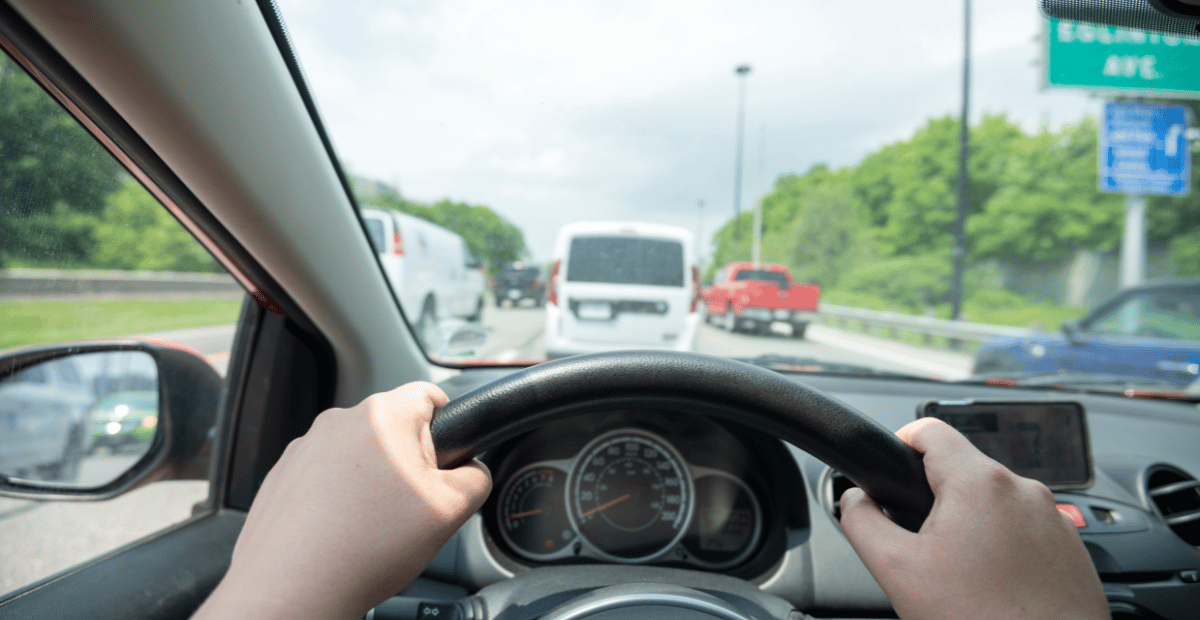
You’re driving the speed limit on the New York State Thruway, but everyone around you is going 70, 75, or faster. Car after car is passing you. You're getting nervous.
At some point, you start to wonder: Would it actually be safer to speed up and keep pace with everyone else?
If you’ve ever had that thought, you’re not alone. New research from the AAA Foundation for Traffic Safety found that 49% of drivers agreed it’s safer to drive with the flow of traffic than obey the speed limit.
But just because speeding has become normal doesn’t mean it’s the safest choice.
When did 10 mph over become the unofficial speed limit?
The AAA Foundation study reveals an interesting contradiction in the way Americans think about speeding.
Most drivers surveyed generally viewed posted speed limits as appropriate. At the same time, many considered driving 10 mph over the posted limit acceptable, and three in 10 agreed with the statement, “No one actually drives the speed limit.”
In other words, many of us believe speed limits make sense—we just don’t necessarily believe we need to follow them exactly.
The research found that the flow of traffic has become a powerful influence on how drivers decide what speed feels appropriate. Drivers often judge speeding not simply by the number on the sign, but by how fast surrounding traffic is moving and whether they believe a driver can safely handle the speed.
That can make speeding feel less like breaking a traffic law and more like simply keeping up.
A few extra miles per hour can make a big difference
Going a little faster may not feel dramatically different behind the wheel, but the consequences in a crash can be.
AAA crash testing compared crashes at 40 mph and 56 mph. The higher-speed crash resulted in substantially more severe damage, demonstrating how an increase in speed can increase the potential for serious or life-threatening injuries.
Watch these crash tests to see the difference speed can make.
Why do we speed?
You might assume the main reason people speed is simple: They’re in a hurry.
But that wasn’t the most common answer in the AAA Foundation research. Drivers’ top reasons for speeding were:
- 31% — To get around slower drivers
- 25% — To reach their destination faster
- 21% — To avoid holding up traffic
That last finding is especially telling. Drivers may feel pressure to speed simply because everyone else is doing it. When traffic around you is moving faster, staying at the posted limit can make it feel like you’re the one disrupting the flow.
But allowing surrounding traffic to dictate your speed can come with serious consequences. Speeding was a factor in nearly 30% of traffic fatalities in 2024.
So, should you keep up with speeding traffic?
Rather than automatically matching the speed of surrounding vehicles, AAA recommends choosing your speed based on the conditions around you.
Start with the posted speed limit, which should be treated as a benchmark for a safe and appropriate speed—and remember that it’s a maximum, not a minimum. Then consider:
Visibility: How far ahead can you see? Reduced visibility means less time to react to something unexpected.
Road conditions: Rain, snow, ice, and other conditions can affect traction and how quickly your vehicle can stop.
Space around your vehicle: Leave enough room to respond if traffic suddenly slows or another hazard develops.
In other words, choosing a safe speed involves more than looking at your speedometer—or at the car speeding past you.
What if everyone around you really is going faster?
Driving at the speed limit while other vehicles fly past you can feel uncomfortable. You don’t need to race them, but you should remain aware of the traffic around you.
If surrounding traffic is moving faster, AAA recommends:
- Staying in the rightmost lane and avoiding driving in passing lanes.
- Maintaining a steady, predictable speed.
- Increasing your following distance.
- Watching for faster vehicles approaching from behind.
Those steps can help you navigate faster-moving traffic without letting other drivers determine how fast you drive.
Don’t let everyone else choose your speed
The AAA Foundation study shows just how deeply speeding has become embedded in everyday driving. When everyone around us is going faster than the posted limit, it’s easy to assume keeping up must be the safer choice.
But surrounding traffic isn’t necessarily a good measure of what’s safe.
The safest speed isn’t simply the speed everyone else happens to be driving. It’s the speed that gives you enough time and space to react when something unexpected happens.
So, the next time you’re going 65 while everyone around you seems to be going 75, don’t let the other cars make the decision for you. Stay aware of the traffic around you, keep right when appropriate, and choose a speed that leaves you enough time, space, and control to respond safely.