









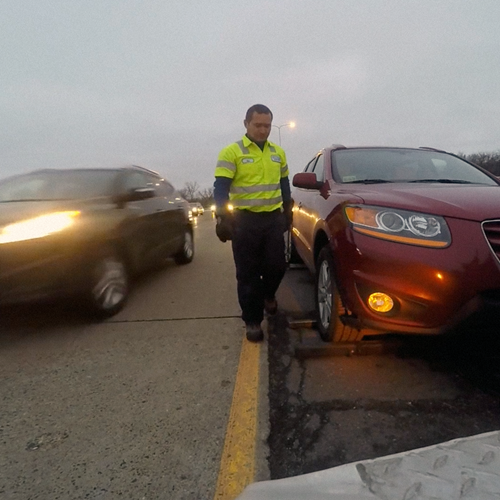
Protect lives at the roadside
See flashing lights, hazard lights or a stopped vehicle? Slow down early, move over when it is safe and stay alert.
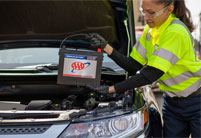
A roadside stop can become dangerous in seconds. Roadside assistance providers, emergency responders, highway workers and stranded motorists may be only feet from traffic. According to the AAA Foundation for Traffic Safety and the National Highway Traffic Safety Administration, data show that more than 2,100 people were struck and killed while stranded or working along the roadside between 2019 and 2023.
In 2025 alone, 36 emergency responders were struck and killed while working at roadway incidents, including law enforcement officers, tow truck operators, transportation workers, fire and emergency medical personnel, and road service technicians.
Your choices behind the wheel can protect someone’s life. When you see a vehicle stopped along the roadway:
- Slow down early.
- Move over when it is safe.
- Stay focused.
- Pass with care.
New York’s Move Over Law
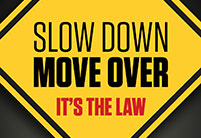
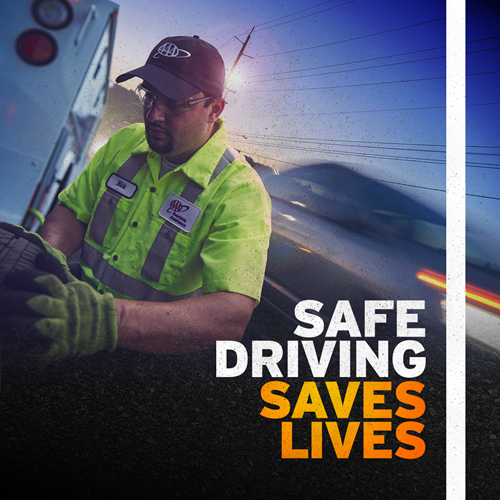
New York State law requires drivers to take precautions, including slowing down and moving over, to avoid a collision with any vehicle stopped along the roadway.
New York first implemented its Move Over Law in 2010 to help prevent collisions involving emergency vehicles. The law was later expanded to protect tow truck operators, highway workers and other roadside personnel. In 2023, it was expanded again to cover all vehicles stopped along the roadway. The expanded protections took effect in March 2024.
That means drivers should take precautions when approaching:
- Police vehicles, ambulances and fire trucks
- Tow trucks and roadside assistance vehicles
- Highway maintenance and construction vehicles
- Utility and other hazard vehicles
- Disabled or stopped passenger vehicles
- Any other vehicle stopped along the roadway
From 2015 through 2021, 48 people were killed outside disabled vehicles in New York. The Move Over Law is intended to prevent these tragedies and make the state’s roadways safer for everyone.
What drivers should do:
Stay focused
Put away your phone, scan the road ahead and never drive while impaired or drowsy. Paying attention gives you more time to recognize a stopped vehicle and react safely.
Slow down early
Ease off the accelerator as soon as you see flashing lights, hazard lights or a stopped vehicle ahead. Do not wait until you are directly beside the vehicle to reduce your speed.
Move over when it is safe
On a road with multiple lanes traveling in the same direction, check your surroundings and move into a lane farther from the stopped vehicle when traffic conditions allow.
Pass with caution
If you cannot safely change lanes, reduce your speed, remain alert and give the people and vehicles at the roadside as much room as possible.
Watch for people
Be prepared for roadside workers, emergency responders or vehicle occupants near the shoulder. Someone may step out from behind a vehicle or equipment with little warning.
Why drivers must both slow down and move over
Changing lanes creates more space between passing traffic and people at the roadside. Slowing down gives drivers more time to see changing conditions, react to an unexpected movement and pass safely.
Research from the AAA Foundation for Traffic Safety found that while more than 90% of drivers who knew about applicable laws understood that they needed to move over, fewer than half knew about requirements to slow down. In states where drivers are always required to slow down, fewer than one in five knew about that requirement.
That is why the complete safety message matters:
Slow down early. Move over when it is safe. Stay alert. Pass with care.
If your vehicle breaks down
A disabled vehicle can leave you and your passengers in a vulnerable position. If your vehicle begins to experience trouble:
- Pull over as safely as possible. If the vehicle can still be driven, move it as far from traffic as conditions allow.
- Turn on your hazard lights. Make your vehicle visible to approaching drivers.
- Note your location. Look for an exit number, mile marker, intersection, landmark or road sign.
- Call for roadside assistance. Be prepared to provide your location, phone number, vehicle description, license plate number and a description of the problem.
- Remain aware of traffic. Avoid standing directly beside or behind the vehicle where you may be exposed to passing traffic.
- Follow the roadside assistance provider’s instructions. The safest place to wait may depend on the road, traffic, weather and the condition of the vehicle.
AAA’s commitment to roadside safety
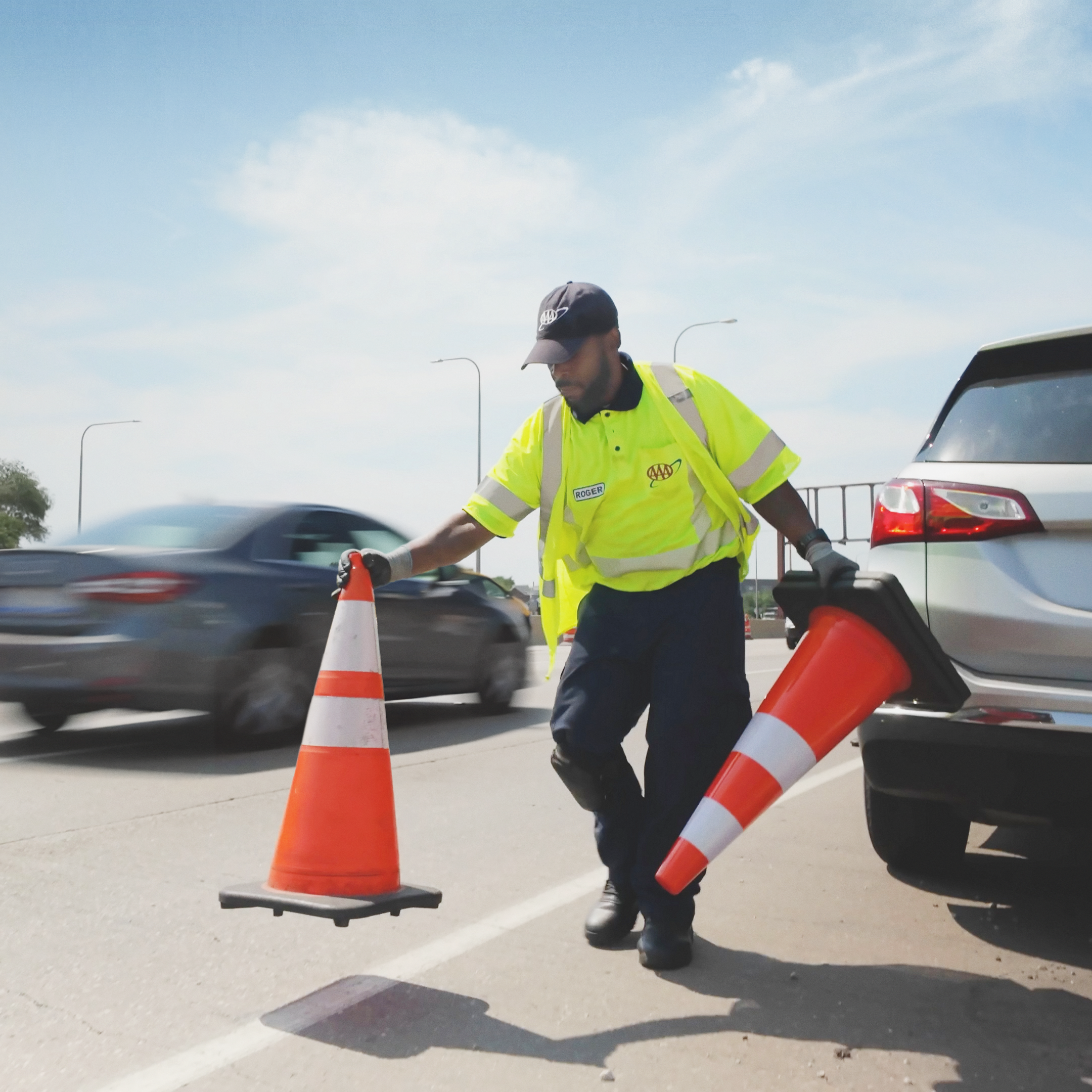
AAA has supported efforts to strengthen Slow Down, Move Over protections since 2007 through research, driver education, public awareness and legislative advocacy. Every state and Washington, D.C., now has a Slow Down, Move Over law, although the vehicles covered, actions required and penalties vary by jurisdiction.
AAA Western and Central New York continues to educate drivers and advocate for stronger protections for roadside workers, emergency responders and motorists experiencing vehicle trouble.
No matter where you drive, remember that the people working or waiting at the roadside are especially vulnerable.
Help save lives at the roadside
When you see flashing lights, hazard lights or a stopped vehicle ahead:
Slow down. Move over. Stay alert.
A few seconds of caution can give someone at the roadside the space and time they need to stay safe.
Learn more