








Five things you need to know about driving in the rain
Five things you need to know about driving in the rain
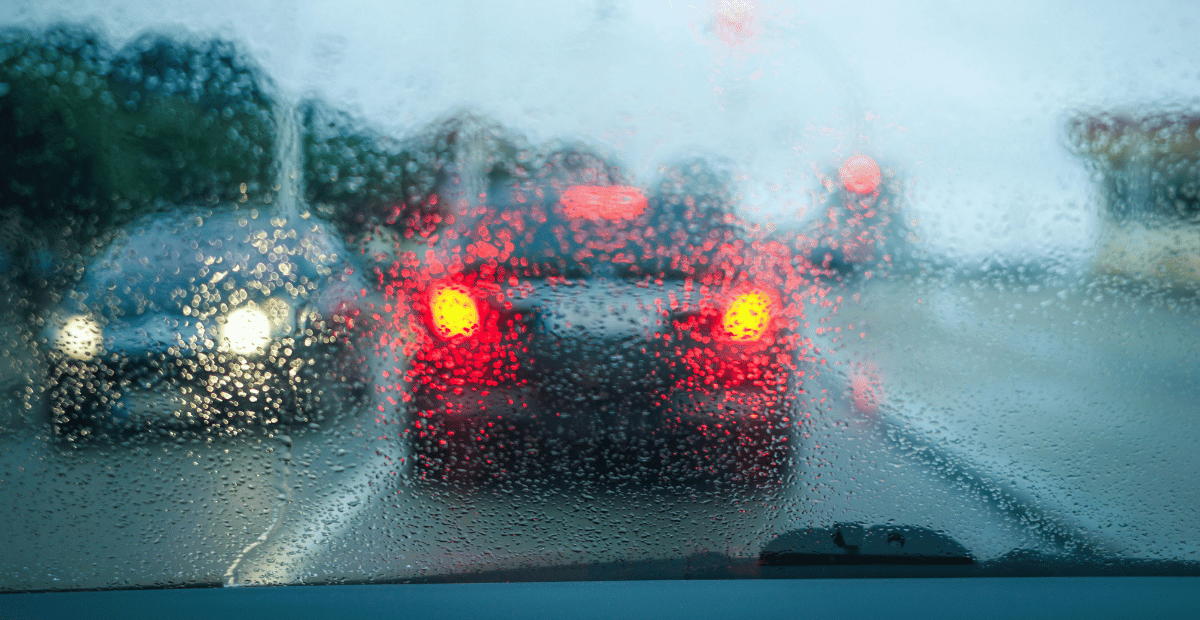
April showers bring May flowers — but wet pavement contributes to nearly 1.2 million traffic crashes every year. Before the next downpour catches you off guard, here's what every driver should know.
Safety starts before you hit the road
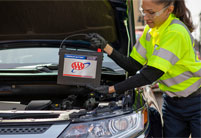
Your goal is simple: see and be seen. Replace wiper inserts that streak or skip — they should clear the glass in one clean swipe. Check that all headlights, taillights, brake lights, and turn signals are working properly so other drivers can spot you in a downpour. If your vehicle has driving assistance technology, keep those sensors clean and unobstructed. And remember: when the wipers go on, the headlights go on too.
Your tires are doing all the work
They're the only part of your vehicle actually touching the road, which means tread depth and tire pressure aren't just maintenance checkboxes — they're your lifeline on wet pavement. Test your tread with a quarter: insert it upside down into the groove. If you can see above Washington's head, it's time for new tires. Check pressure on all four tires — plus the spare — when the tires are cold.
Turn off cruise control
Cruise control is great on a clear, dry highway. In wet conditions, it's a liability. If your tires start to lose traction, your instinct is to ease off the accelerator — but you can't do that when cruise control is engaged. Wet-weather driving demands your full attention and full control. Keep cruise control off so you always have every option available to you.
Slow down and create space
Hydroplaning happens faster than most drivers expect. With as little as 1/12 inch of water on the road, your tires need to displace a gallon of water per second just to maintain contact. Even new tires can lose grip at speeds as low as 35 mph. Slow down, avoid hard braking or sharp turns, and give yourself room — at least five seconds of following distance behind the car ahead. Start braking for intersections and turns earlier than you think you need to.
Technology assists — it doesn't drive for you
Automatic emergency braking, lane assist, stability control — these systems are valuable, but they're backups, not replacements for good judgment. Drive as if you don't have them, and let them catch you if something goes wrong. Because here's the thing AAA always comes back to: a focused, prepared driver is still the most effective safety technology on the road.
The bottom line
Rain changes everything about how your vehicle behaves — and how quickly a routine drive can go wrong. Slow down. Create space. Stay off cruise control. And take care of your vehicle before the weather takes care of you.
Need new wiper blades? Check out special AAA Member Deals at NAPA Auto Parts.