












What does summer heat actually do to an electric vehicle?
What does summer heat actually do to an electric vehicle?
You've probably wondered about it, whether you drive one or not. Electric vehicles and hybrids are everywhere now, and one of the most common questions is a pretty practical one: what happens to the range when it's hot out?
AAA's latest study has the answer. Researchers tested three EVs and three hybrids at cold, moderate, and hot temperatures, putting each vehicle on a chassis dynamometer (essentially a treadmill for cars) while adjusting the lab temperature and keeping the cabin set to a comfortable 72 degrees. The results give a pretty clear picture of what heat actually costs you.
The numbers
At 95°F, hybrid vehicles lose about 12% of their fuel economy. EVs drop around 10% in efficiency and shed roughly 8.5% of their driving range compared to mild-weather conditions. The main reason? Air conditioning. Keeping the cabin cool draws real energy from both powertrains, and on a hot July highway, you'll feel it in your range estimate before you feel it anywhere else.
For context, winter is actually harder on both vehicle types. EVs can lose nearly 39% of their driving range at 20°F, and hybrids aren't spared either, dropping nearly 23% in fuel economy. The cost adds up too: hybrid drivers pay about $28 more per 1,000 miles in winter, while EV drivers see increases of $32 per 1,000 miles at home charging rates and as much as $77 on public chargers.
Why does cold cost so much more? In an EV, the battery becomes less efficient in low temperatures while the heater draws directly from that same battery. You're getting less range out of every kilowatt-hour because you're using more of them just to stay warm. One simple habit helps: pre-heat (or cool) your cabin while your car is still plugged in, so you're using grid power instead of your driving range to get comfortable before you head out.
The charging cost
For EV drivers on longer summer trips, where you charge matters as much as when. AAA's data found that in hot weather, EV operating costs rise about $6.78 per 1,000 miles for drivers charging at home — but climb to $16.25 per 1,000 miles on public chargers. Road trip charging math is worth doing ahead of time.
Hybrid vs. electric
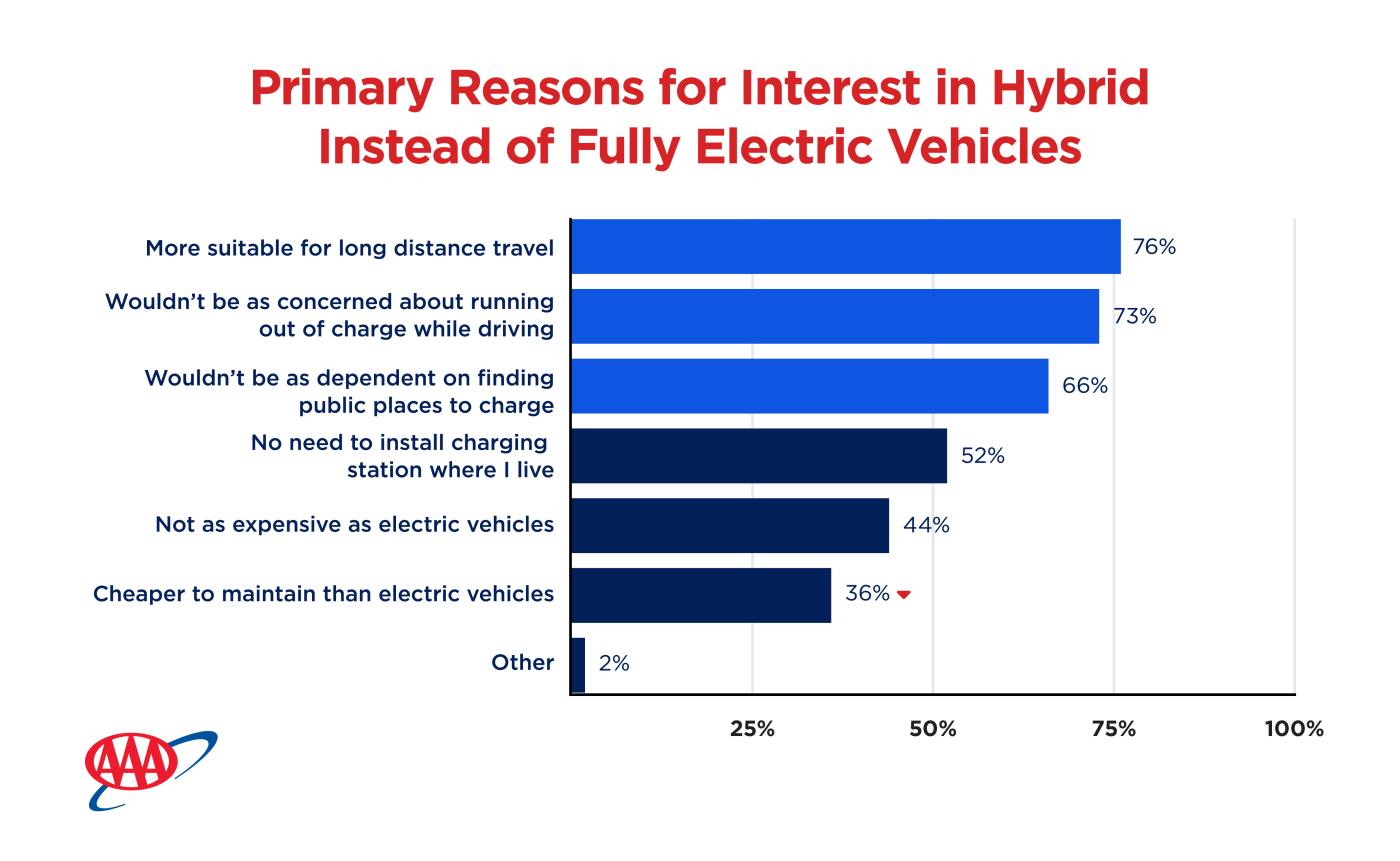
American drivers continue to show greater interest in hybrid vehicles than in fully electric models. This year, 35% of American drivers say they're likely to buy a hybrid over a fully electric vehicle for their next purchase. The top reasons are practical ones: not having to worry about running out of charge on a long drive and not being dependent on finding a public charging station. Summer road trip season has a way of making those concerns feel very real.
Whether you're already driving electric or just starting to get curious, summer is a good reminder that no powertrain is immune to the weather. Heat asks a little more of your vehicle — and knowing that going in means fewer surprises on the road.
Are you EV-curious? Rent an EV or hybrid from Hertz and give one a try! May is Hertz month and AAA Members currently save up to 35% off the base rate.