








You could owe New York State money for speeding and not even know it yet
You could owe New York State money for speeding and not even know it yet
It might be a familiar feeling (unfortunately, it is for the author of this blog). You're driving along. You see a police officer on the side of the road and you glance at your speedometer. And you're going way too fast. You slow down, but the officer pulls out, follows you, and turns on their lights. You just got a speeding ticket.
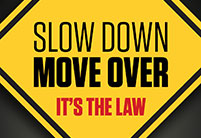
But these days, police officers aren't the only ones catching speeders. New York State drivers can now face a penalty when a camera catches them speeding in a work zone. Under the Automated Work Zone Speed Enforcement pilot program, speed enforcement cameras are placed in construction or maintenance zones on state-controlled highways, parkways, bridges, and tunnels. If the cameras detect unlawful speeding, the owner of that vehicle will be mailed a Notice of Liability.
Residents of New York State should expect the Notice to arrive within 14 days. It's not a traditional speeding ticket — it's a civil penalty. No points will be assessed against your driver's license and your insurance company will not be notified, but you will have to pay a fine starting at $50 for a first-time violation.
The program is designed to enhance the state's ongoing efforts to slow motorists down in work zones and make our highways safer. And it's needed: according to WGRZ-TV in Buffalo, a recent deployment of speed enforcement cameras on I-290 in Amherst led to more than 2,500 notice of liabilities sent to drivers in just one week (April 20-27, 2026).
“Just the volume of notice of liabilities over those three deployments was quite shocking,” NYS Department of Transportation public information officer Ryan Whalen told WGRZ. “What’s interesting about these deployments is this wasn’t even a reduced speed limit zone. So the people that did receive these notices of liability were breaking the law whether they were in a work zone or not.”
Whalen also noted some alarming speeds captured during the deployments, including two vehicles clocked at 101 mph and others hitting 90 and 91 mph, all in an active work zone with people present on and alongside the road.
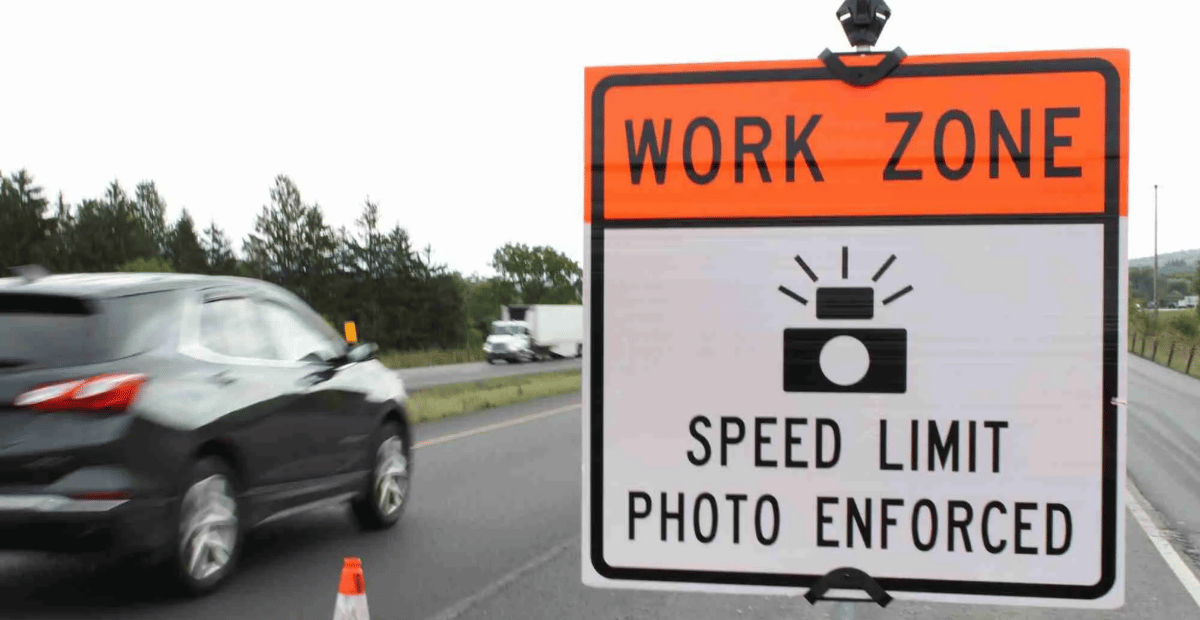
And with the pilot program extended to 2031 and expanded to double the number of eligible work zones, these cameras aren't going anywhere. So how exactly do they work? The cameras, deployed in SUVs, move around regularly based on schedules, weather, and priorities. Crews are required by law to place special "Work Zone Speed Limit Photo Enforced" signs to alert drivers that the monitoring system is being used. I've personally witnessed a mobile unit on I-90 recently; it was hard to miss.
Before capturing violations, each system runs through a daily self-check. Then, the system uses radar to identify any vehicle traveling equal or faster than the posted speed limit. The system captures photos and the speed of the passing vehicle, along with the time, date, location, lane, direction of travel, and vehicle license plate. A state-certified technician reviews the violation and certifies that the information collected is correct. Finally, a Notice of Liability is created and mailed to the registered owner of the vehicle.
Fines start at $50 for the first offense, grow to $75 for a second violation within 18 months, and are capped at $100 for third and subsequent violations within 18 months. If you don't pay your fine, the state may place a hold on your car's registration. An important note: the owner of the car is responsible for the fine, not the driver. Revenue from the fines is used to pay for program costs, and excess revenue (if any) will be used for additional work zone safety programs.
What if the cameras are wrong? Technology is great, until it's not. However, New York State offers drivers the opportunity to dispute a Notice of Liability by either returning the "Dispute Coupon" attached to the notice or submitting the "Dispute the Notice of Liability" form on the NYS Workzone website. Drivers will need to provide evidence such as GPS logs or witness statements. Drivers dealing with more complicated circumstances, such as a stolen vehicle, may also want to consult a traffic attorney.
Whalen told WGRZ that a Notice of Liability could be the least of your worries. "The program is sort of set up to be a wake-up call," he said. But it's an important call that needs to be answered. "Our number one priority is the safety of the drivers on our roads," he added. "And on the other side of that coin, the safety of the people that work with us. They all deserve to go home safely at the end of the day."
And there's also the wake-up call to our wallets. Reddit user jb8311 said on r/Buffalo that they learned their lesson after their husband received a Notice in Rochester. "As soon as we see the work zone signs, we set the cruise control to 45 mph and just let the traffic zoom past. I work too hard for my money to waste it on tickets."
The bottom line? Slow down, stay alert, and save yourself the headache.