








Keep our first responders safe.
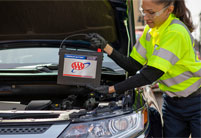
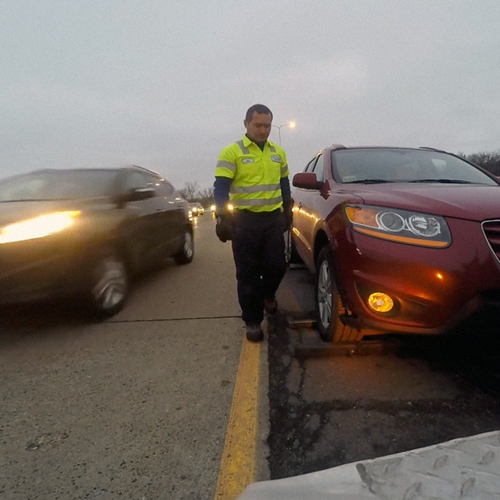
Each year, AAA rescues millions of stranded drivers across the country. At the heart of this effort are tow providers who put their lives at risk each time they respond to a call for help. Sadly, too many emergency responders, including tow providers, lose their lives at the roadside, and hundreds more are injured while tending to disabled vehicles.
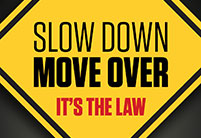
The same is true for others who work at the roadside, either doing construction, cleaning up debris, or mowing grass. Our members also face danger when they are stranded and waiting for help. For the last several years, AAA has focused on raising awareness of Move Over laws. In New York, we successfully lobbied to have the law expanded to include any disabled vehicle in an effort to protect you, the driver, and your passengers.
We continue to promote recent research from the AAA Foundation for Traffic Safety knowing that Move Over laws alone won’t solve the roadside safety problem. Risky driving behaviors like speeding and impaired driving have increased and contributed to a significant number of roadside crashes. By promoting messages that address Move Over and risky driving behaviors, our goal is to have a greater impact on reducing the number of fatalities at the roadside.
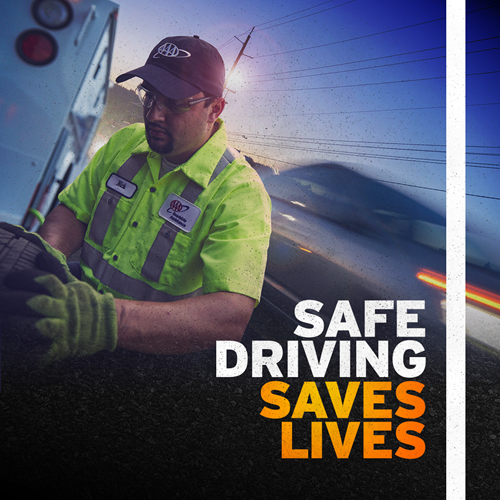
Safe driving saves lives.
AAA asks drivers to please:
- Pay attention while driving (put down the phone!)
- Avoid speeding and never drive impaired, distracted, or drowsy
- Slow down and move over to give anyone at the side of the road space
According to the AAA Foundation, many drivers do not understand the danger roadside workers face when drivers do not follow Move Over laws. More than half of drivers say they do not completely understand the potential consequences for violating the move over law in their state. Additionally, according to research by the AAA Foundation, 63 percent of crashes that resulted in roadside assistance providers being struck and killed occurred in crashes in which the striking vehicle had already left the road and was traveling on the shoulder or beyond before impact. This suggests the involvement of factors such as impairment, fatigue, or distraction. More than one third of striking drivers who were tested for alcohol were alcohol-positive, but nearly half were not tested.
AAA's commitment to safety.
To increase awareness and understanding of Move Over laws, AAA partners with emergency responders, state departments of transportation, and other roadside workers on public outreach to educate motorists on their responsibilities when they approach a vehicle stopped on the side of the road with flashing lights and the danger inactions may pose to roadside workers. Additionally, the AAA Foundation recently completed two studies on the effectiveness of countermeasures, including electronic vehicle-mounted variable message signs (VMS), cones, and flares, to protect roadside workers. The studies found that the odds of a vehicle moving over were 95% higher when the VMS was used. Additionally, cones, flares, and emergency flashing light patterns led to significant lane shifts by drivers but were less effective at reducing speeds or increasing the distance to the passing vehicles that did not change lanes.
AAA also supports the International Towing Museum’s Wall of the Fallen and Survivor Fund to raise awareness and assist the families of tow providers who have died while performing their job. Each year, new names are added to the Wall of the Fallen to recognize and honor those who have died and to bring awareness to the dangers faced by tow providers. The Survivor Fund financially assists the families of tow providers that have died while performing their job. AAA continually conducts outreach to the towing industry through industry events, including major tow shows.
Move Over laws help keep emergency responders, tow providers, and other roadside workers safe as they perform their jobs. AAA remains firmly committed to ensuring that Move Over laws are strong and motorists understand their responsibilities when driving, which includes being distraction free, following speed limits, and avoiding impairment.